Mixer selection
Planetary Mixer vs Spiral Mixer: The Commercial Bakery Guide
Understand bowl action, dough development, batch limits, attachments, and ideal applications when comparing planetary and spiral mixers.
Expert note
This guide is educational and based on Kirthy Industrial Equips’ commercial bakery equipment experience since 1994. Final capacity, utilities, and installation requirements depend on the selected model and your site.
01
Different motion, different strength
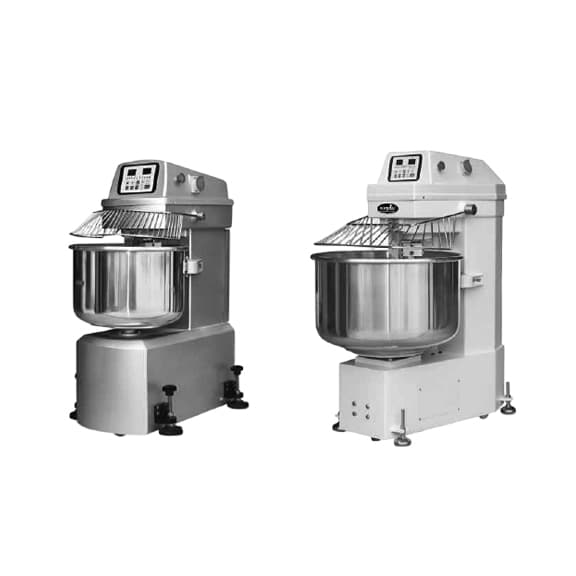
A planetary tool rotates around a stationary bowl and accepts a whisk, beater, or hook. It is versatile for cream, batter, icing, and moderate dough work. A spiral mixer rotates the bowl and spiral together to develop bread dough efficiently with lower frictional heat.
02
Choose from the production mix
A cake, pastry, or hotel kitchen often values planetary versatility. A bread, bun, or pizza operation usually benefits from a spiral mixer's dough focus.
- Planetary: creams, cake batter, cookies, fillings, and mixed menus
- Spiral: bread, buns, pizza, and repeated yeast-dough batches
- Do not assume bowl litres equal safe dough kilograms
- Check minimum as well as maximum batch performance
03
Questions that expose the right model
Share flour weight per batch, hydration, final dough weight, batches per shift, mix time, desired dough temperature, and available power. Confirm speeds, timer, bowl design, guarding, transmission, and cleaning access.
04
Plan for peak day reliability
Avoid operating continuously at the absolute stated maximum. A sensible duty margin supports consistency and equipment life. If both dough and pastry are major lines, separate purpose-fit mixers may be more productive than forcing one machine to do everything.
Make it specific to your bakery
Get a capacity-matched recommendation.
Share your menu, batch size, daily output, city, available space, and preferred timeline.
Ask the equipment team