Fermentation
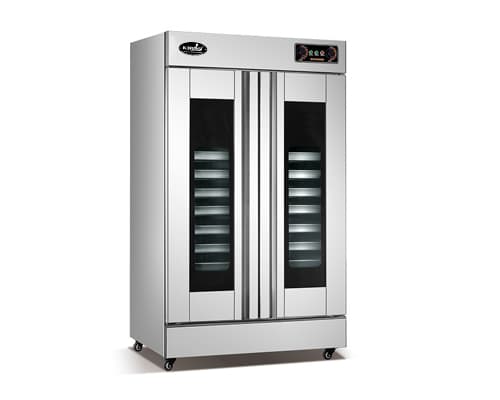
Commercial Bakery Proofer Buying Guide: Capacity, Control, and Timing
Choose a bakery proofer using tray capacity, temperature and humidity control, dough schedule, recovery, and workflow fit.
Expert note
This guide is educational and based on Kirthy Industrial Equips’ commercial bakery equipment experience since 1994. Final capacity, utilities, and installation requirements depend on the selected model and your site.
01
A proofer is a scheduling tool
Controlled temperature and humidity reduce dependence on changing room conditions. Better control supports predictable dough volume, texture, bake timing, and oven utilisation.
02
Size from the oven backwards
The proofer should prepare enough trays to keep the oven productively loaded without holding dough too long.
- Trays required per oven load
- Proof time for the slowest major product
- Number of products sharing the cabinet
- Rack or tray dimensions
- Loading frequency and recovery after door opening
03
Evaluate control and cleaning
Confirm usable temperature and humidity range, sensor location, steam or water system, drain needs, door sealing, interior finish, tray spacing, and access for descaling and cleaning.
04
Protect the full fermentation process
A proofer cannot correct poorly mixed dough or uncontrolled dough temperature. Standardise ingredient temperature, mixing endpoint, dough weight, resting, and proof criteria together.
Make it specific to your bakery
Get a capacity-matched recommendation.
Share your menu, batch size, daily output, city, available space, and preferred timeline.
Ask the equipment team